

By Hridoy Ahmed | Last updated: October 2026 | 8 min read
Short answer: E-E-A-T stands for Experience, Expertise, Authoritativeness and Trust. It is a way to describe what helpful, reliable content looks like. It is not a single score or a switch you can turn on. You show it with real first-hand experience, clear authors, accurate facts with sources, honest business details and a safe, well-kept site.
In this guide
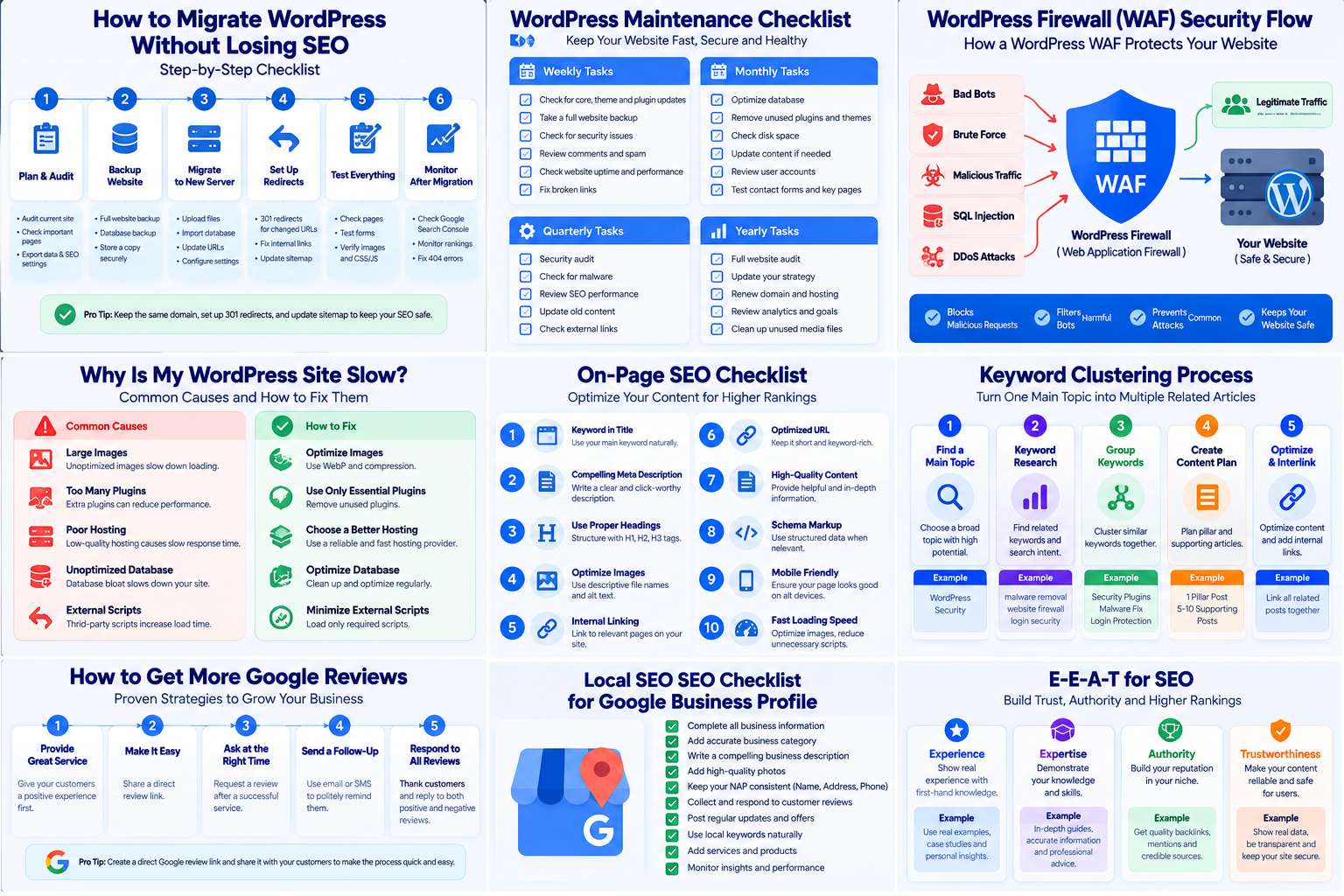
What E-E-A-T means
- Experience: the author has real, first-hand experience with the topic, such as using a product or doing the work.
- Expertise: the author has the knowledge or skill the topic needs.
- Authoritativeness: the author or site is a known and trusted source on the topic.
- Trust: the page is accurate, honest and safe. Google’s quality rater guidelines describe trust as the most important part of the group.
Google’s guidance on creating helpful, reliable, people-first content uses these ideas to help site owners judge their own content.
What E-E-A-T is not
Google says its quality raters use their guidelines to help evaluate how its search systems perform, and that their ratings do not directly influence ranking. So E-E-A-T is not one factor with a number. Think of it as a checklist for quality and honesty, not a trick.
For AI search, Google’s guide says non-commodity content, with a unique point of view, is likely to matter most over time. That is the same idea as experience. See my guide on how to optimize your website for AI search.
8 ways to show E-E-A-T
1. Show real experience
Share real examples, screenshots, results you can prove and mistakes you have seen. Do not make up numbers or client stories. If you cannot prove it, leave it out.
2. Show who wrote the page
Add an author line and a short author box with real credentials and a link to a fuller bio. See my Who Is Hridoy Ahmed? page for how I present mine.
3. Build a clear About page
Explain who you are, what you do, how long you have done it, and where you are based. Link to your real profiles. My guide to entity SEO explains why consistent details help.
4. Give your sources
When you state a fact, link to the official documentation or the original source. If you are not sure, say so.
5. Keep content accurate and up to date
Review important pages regularly. Fix outdated facts and show an honest “last updated” date.
6. Be honest about your business
Show clear contact details, pricing or how pricing works, and policies. Use only real reviews and case studies. Do not buy fake reviews.
7. Keep your site safe and easy to use
Use HTTPS, keep WordPress and plugins updated, and fix hacked or broken pages quickly. A site with malware or spam links is hard to trust. Make pages work well on mobile and avoid intrusive pop-ups.
8. Use AI carefully
If you use AI tools, fact-check and edit everything, and add your own experience. See AI-generated content and SEO: what Google says.
If you want an expert review of how trustworthy your site looks and what to fix first, see my SEO and technical SEO service.
Common mistakes
- Writing generic content with no first-hand detail
- Publishing articles with no author or an invented author
- Claiming credentials, awards or results you cannot prove
- Leaving old pages with outdated facts and no date
- Adding fake reviews or testimonials
- Treating E-E-A-T as a plugin or schema setting
FAQ
Is E-E-A-T a Google ranking factor?
Not as a single factor. Google says its raters use the guidelines to evaluate its systems, and their ratings do not directly influence ranking. The ideas behind E-E-A-T still describe the quality Google wants to reward.
Does the first E stand for Experience?
Yes. Experience means first-hand, real-life knowledge of the topic. It was added to the original E-A-T idea.
Do I need an author box on every post?
It is a good habit. A short author box with a real name and bio helps readers see who is behind the page.
Can schema markup add E-E-A-T?
No. Schema can describe who you are, but it cannot create real experience or trust. It must match what people can see on the page.
Want to know what is hurting trust on your site? I review content, authors and technical health and give you a clear fix list. See my SEO and technical SEO service.
About the author: Hridoy Ahmed is an SEO specialist and WordPress security expert based in Dhaka, Bangladesh. He has 8+ years of experience and works with clients worldwide.