
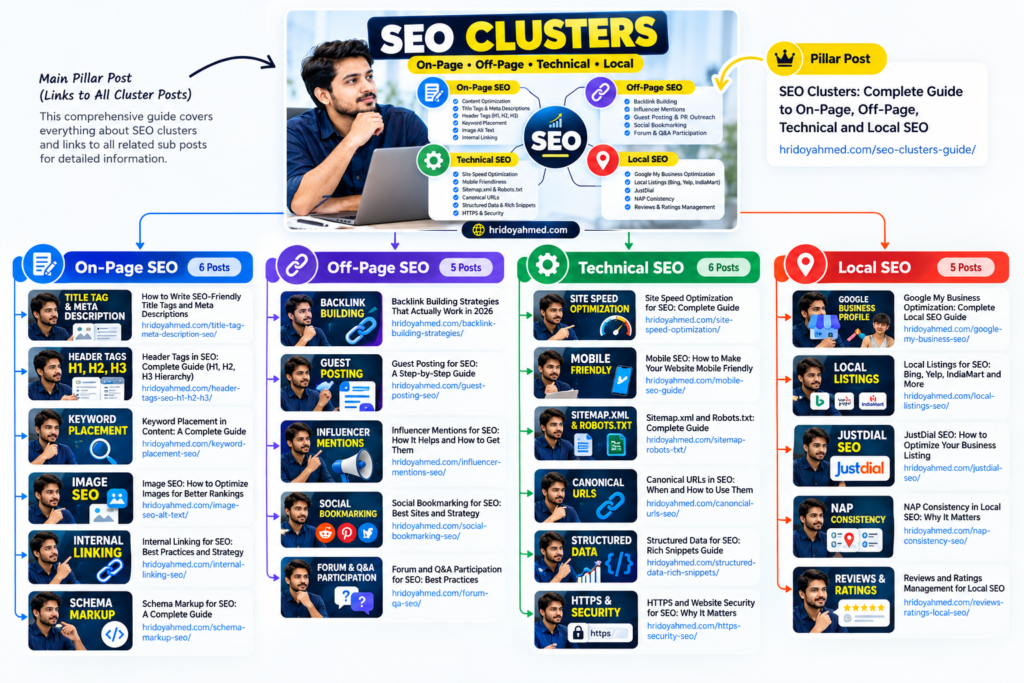
Search intent is the goal behind a search query: what a person is trying to learn, compare, find, or do. To match intent, examine the wording of the query, review the kinds of pages searchers are shown, and decide whether the user needs an explanation, comparison, specific destination, or way to take action. Group keywords on the same page when the intent is substantially the same; create separate pages when the needs differ.
Search intent is one of the most useful inputs when building an SEO cluster, because it helps decide which topics belong together and which need their own page.
The Four Common Search Intent Types
1. Informational intent
The searcher wants to understand something or solve a problem. Queries often include “what is,” “how to,” “why,” “guide,” or “checklist.” A practical tutorial or explanation is often a good fit.
2. Commercial investigation
The searcher is researching options before making a decision. Phrases such as “best,” “vs,” “review,” and “alternatives” may indicate comparison intent. Provide useful criteria, limitations, and transparent comparisons rather than empty promotional claims.
3. Transactional intent
The searcher is ready to take an action, such as purchasing, booking, or hiring. A service page, product page, or clear conversion page is often a better fit than a broad educational article.
4. Navigational intent
The searcher is trying to reach a particular website, brand, or page. Make sure your official destination is clear and accessible, and avoid creating duplicate pages that compete for the same branded query.
These categories are useful shortcuts, not rigid rules. A query can have mixed intent, and intent can vary by location, wording, and context.
How to Identify Search Intent
- Write down the exact query. Do not classify a broad topic based only on one word.
- Look at the result types. Are results mainly guides, product pages, local listings, videos, or comparisons? Treat this as evidence, not a command to copy competitors.
- Ask what a successful answer looks like. Would the user need a definition, steps, a comparison, a price, or a service enquiry?
- Compare related queries. Group phrases that can be answered well by one page.
- Check your own Search Console data. Review which queries already bring impressions and clicks to existing URLs.
How to Map Keywords to Pages
| Query | Likely intent | Suitable page |
|---|---|---|
| What are SEO clusters? | Informational | Comprehensive pillar guide |
| How to cluster keywords | Informational / task-focused | Step-by-step tutorial |
| Best SEO plugin for WordPress | Commercial investigation | Comparison with selection criteria |
| WordPress SEO service | Transactional | Service page with scope and enquiry option |
| Rank Math login | Navigational | Official destination or clear navigational answer |
The example is a starting point. Verify actual results and your audience before finalising a mapping.
How Search Intent Prevents Keyword Cannibalisation
Two pages may rank for overlapping queries without being a problem. The concern is when pages target the same need, provide nearly identical answers, and make it unclear which URL should serve the searcher. Audit their content, queries, links, and purpose before merging or redirecting anything. Sometimes the right solution is to clarify each page’s unique role, not delete one.
Use Intent to Build Better SEO Clusters
Choose a pillar page for the broad topic, then create supporting pages for distinct questions that deserve depth. Link pages together where the next step is useful. The keyword clustering guide explains how to group terms; the semantic SEO guide explains how entities and related concepts add context.
Common Mistakes
- Assuming every keyword variation needs its own URL.
- Choosing intent from a keyword tool label without checking the actual query.
- Copying competing pages instead of improving on their usefulness.
- Making a sales page answer every informational query—or turning every service query into a blog post.
- Changing URLs before checking links, traffic, and historical performance.
Frequently Asked Questions
Can one page target multiple keywords?
Yes, when the queries share intent and one page can answer them naturally and completely. Do not force unrelated topics together just to target more terms.
How often should search intent be reviewed?
Review it when you create a page, when search results change noticeably, or when Search Console shows a mismatch between queries and the page receiving impressions.
Does search intent matter for AI search?
Understanding the user’s actual question remains important for useful content across search experiences. It does not guarantee that an AI system will cite your page.
Build the Cluster
Use search intent to plan your next content update, then connect it to the SEO Clusters: Complete Guide. A well-mapped cluster serves different needs without multiplying near-duplicate pages.